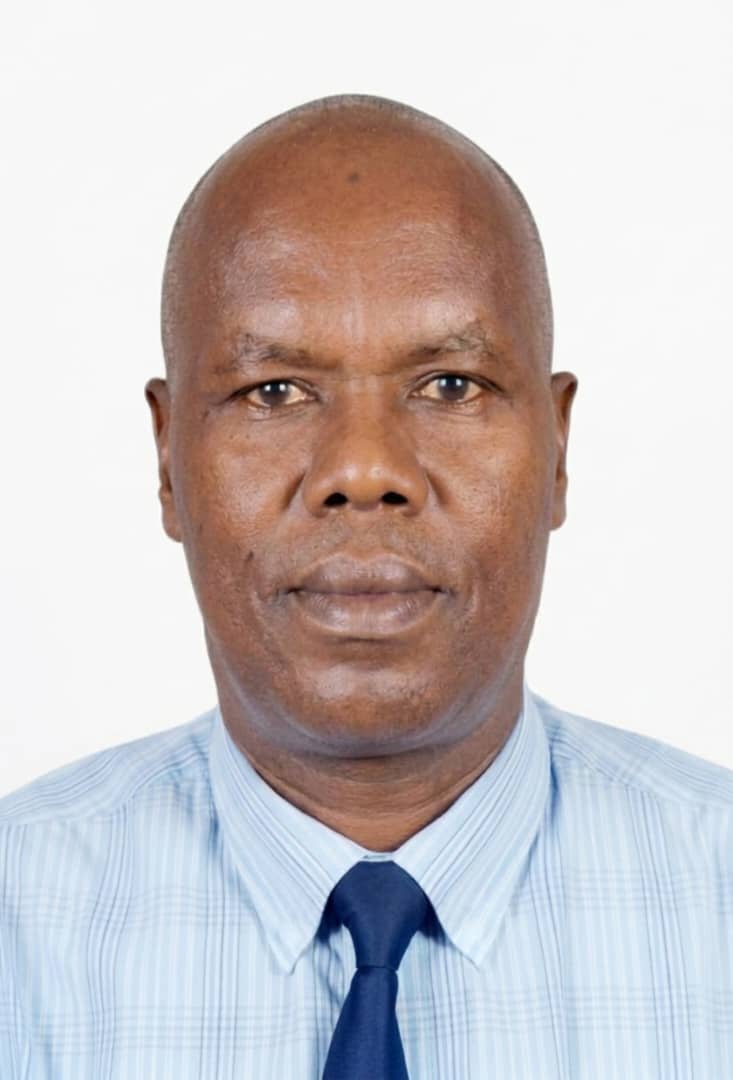
 Professeur.Elias SENTAMBA
Nom et prénom :Elias SENTAMBA
Faculté/Institut : Faculté des Sciences Politiques et Jurdiques(FSPJ)
Centre de recherche : CREDSR
- The institution of ubushingantahe played a central role in precolonial Burundi as a source of political legitimacy, social cohesion, and conflict resolution. Through their moral and judicial authority, the bashingantahe contributed to the stability of the monarchy and the regulation of social relations. Colonial rule (1896–1962) profoundly transformed this institution by replacing traditional authorities with Western-trained administrative and religious elites, thereby reshaping the foundations of political legitimacy. After independence, the UPRONA one-party regimes instrumentalized ubushingantahe for political legitimation, undermining its core values and weakening its social credibility through politicization and exclusion. During the democratization of the 1990s, the institution became increasingly contested, culminating in its partial reconfiguration through the creation of the bahuza in 2021. Using a qualitative socio-historical approach, this study examines the historical evolution, political transformations, and contemporary significance of ubushingantahe in Burundi.
publier le 2026-10-05 05:34:10
- Au Burundi, la promotion des droits des personnes handicapées s’inscrit dans les cadres international et régional consacrés par la Convention relative aux droits des personnes handicapées et le Protocole de l’Union africaine en la matière. Au niveau national, cette dynamique se traduit par la ratification des instruments internationaux, la loi de 2018 sur les droits des personnes handicapées et la politique nationale d’éducation inclusive. Après une revue de littérature, cette étude qualitative s’appuie sur des entretiens semi-directifs menés auprès d’étudiants avec et sans handicap, du personnel académique et administratif, des responsables de l’éducation inclusive au ministère de l’Éducation ainsi que des organisations défendant les droits des personnes handicapées. Elle repose également sur l’observation des pratiques institutionnelles et du vécu quotidien des étudiants en situation de handicap afin d’identifier les obstacles à l’inclusion et les stratégies mises en œuvre par les différentes parties prenantes. Les résultats révèlent de multiples barrières : inaccessibilité des infrastructures, insuffisance des supports pédagogiques et des technologies d’assistance, manque de formation du personnel, etc. Face à ces obstacles, les étudiants en situation de handicap développent des stratégies d’adaptation, tandis que les interactions avec leurs pairs oscillent entre empathie et méconnaissance, renforçant des pratiques parfois excluantes et stigmatisantes. L’article conclut que l’inclusion universitaire ne peut se limiter à de simples ajustements ponctuels : elle exige une transformation structurelle des représentations sociales, des pratiques et des environnements institutionnels pour réaliser une université véritablement inclusive.
publier le 2026-10-05 05:35:32
- Faced with multifaceted challenges in the area of sexual and reproductive health, such as teenage pregnancies in schools, gender-based violence, early marriages, low adherence to family planning, very high fertility rates, among many, the Burundian government has since 2007 undertook a national reproductive health policy. The policy is based on eight components, including (to focus on what is most relevant to us): family planning, prevention and treatment of abortions, prevention and treatment of STIs and HIV/AIDS, and promotion of RH among young people and adolescents, etc. However, the implementation process of the said policy remains a challenge. The ministries in charge of health and education, respectively, advocate modern contraceptive methods and sexuality education in schools, while some religious denominations prioritize natural methods such as sexual abstinence in accordance with their interpretation of the Holy Scriptures. This chapter therefore analyzes the contribution of religions to the public policy process, taking the culturally delicate issue of sexual and reproductive health policy as a case study. It assesses the scope of the teachings inculcated by religions and analyzes the contradiction between these teachings and the actions promoted by the government in this highly sensitive realm of sexual and reproductive health.
publier le 2026-10-05 05:36:36
- Pre-colonial Burundi was a homogeneous society: Burundians shared the same language, culture, religion, history, etc. and lived harmoniously on the same hills. This population was made up of a multitude of clans and Hutu, Tutsi, Ganwa and Twa social components of very secondary social importance. Even the monarchy reflected the various segments of such a nation. It was this harmony that Belgian colonisation definitively ruined, with the policy of divide et impera. By claiming that the Ganwa and the Tutsi were the superior races and the Hutu and Twa the inferior ones, a whole process of political and administrative manipulation ended up constructing a highly polemical ethnic identity, which fuelled the bloody conflicts of 1965, 1972, 1988, 1993-2000, etc. It was to put an end to this cycle of ethno-political violence that the Arusha Accords signed in 2000 instituted consociational democracy (on which the 2005 and 2018 constitutions were based), with ethnic quotas: 60% Hutu and 40% Tutsi for institutions such as the Government, parity of 50% for the Senate and the Defence and Security Bodies (Army and Police), etc. After showing how Belgian colonisation constructed these 'ethnic identities' and how this ethnicisation of society actually underpinned fratricidal wars, this paper analyses how democracy built on an 'ethnically' divided society still has its work cut out for it. While it seems to ensure the hoped-for appeasement in normal times, the demon of ethnic violence is no less resurgent in times of political mobilisation.
publier le 2026-10-05 05:44:27
- Abstract
Digital technologies increasingly mediate identity, social relations, dispute resolution, and political authority, raising philosophical questions that resist a strict separation between virtual and embodied life. This article examines whether Cyberism can develop toward a cross-cultural philosophy of the digital age through dialogue with three Burundian normative resources: Ubuntu, Ubushingantahe, and Ingoma. The Cyber-Physical-Social Thinking (CPST) framework is interpreted as an analytical heuristic based on analytical distinction without ontological separation. Using an integrative conceptual review and dia logic comparative analysis, the study reconstructs Ubuntu around relational personhood, Ubushingantahe around contextual and restorative procedure, and Ingoma around materi ally embodied and publicly recognized authority. Their relations to CPST are treated as non-exclusive analytical affinities. Three bounded propositions emerge: rights-preserving relation-sovereign identity, restorative digital dispute governance, and collectively enacted digital sovereignty. Critical testing identifies conditions concerning agency, exclusion, coer cion, digital formalization, legitimacy, and epistemic asymmetry. The dialogue also requires two revisions to Cyberism: personhood and legitimacy should be treated as properties of cross-domain configurations, and collective deliberative judgment should be accommo dated as a Social–Thinking configuration. The study offers no empirically validated policy model; its contribution is a revisable framework for cross-cultural philosophical inquiry and future institutional evaluation in Burundi
Keywords: Cyberism; Cyber-Physical-Social-Thinking (CPST); Ubuntu; Ubushingantahe, Ingoma; cross-cultural philosophy; digital identity; restorative digital dispute governance; digital sovereignty; Burundi
publier le 2026-10-15 10:44:06